
Artist Alex Maceda on Ambiguity, Ambition, and the Space Between Forms
On leaving startup life, finding stillness in New York, and painting forms that refuse to resolve too quickly
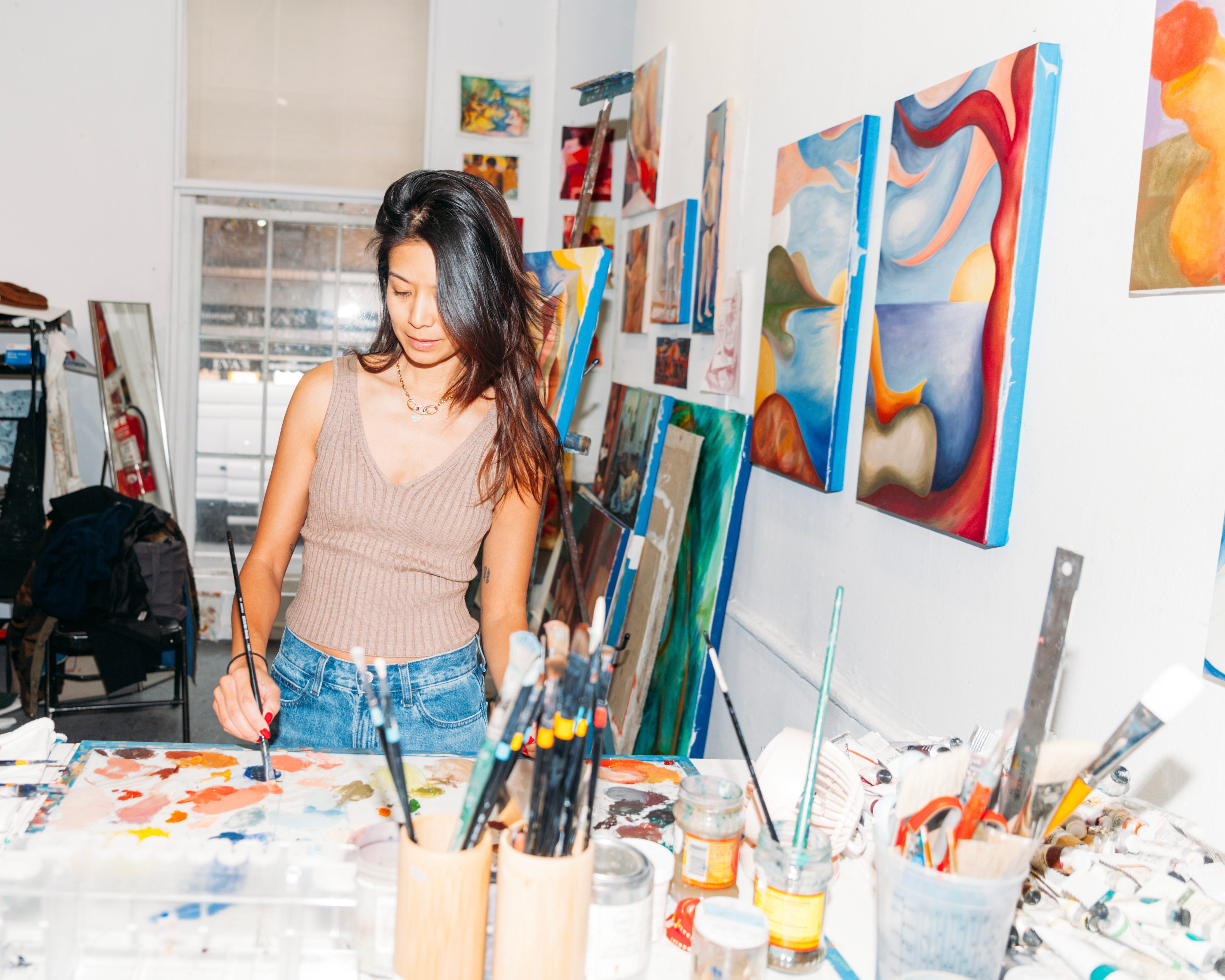
“I currently have a note tacked on my studio wall that says, ‘ambiguity is not a failure of communication.’ “
— Artist Alex Maceda on her work
This feels like the perfect place to start with artist alex maceda. In a world that forces you to pick a side on everything, Alex’s work feels like a pause. You don’t have to choose left or right, hot or cold, activist or apathetic. You can just be with the work, and every time I see her paintings, that is exactly what I feel.
Alex didn’t arrive at her practice through the clean mythology of certainty.
In 2019, she was promoted to VP of Marketing at the startup where she had spent years building toward that exact title. She was thirty, ambitious, and by all external measures, moving exactly as planned. Then she got the job and realized she didn’t want it.
So she left.
A few weeks later, San Francisco shut down for COVID, and the six-month trip she had imagined became something else entirely - time alone in an apartment, painting again for the first time in nearly a decade, posting the work online even when it felt terrifying, and slowly making her way toward a word that took years to feel true: artist.
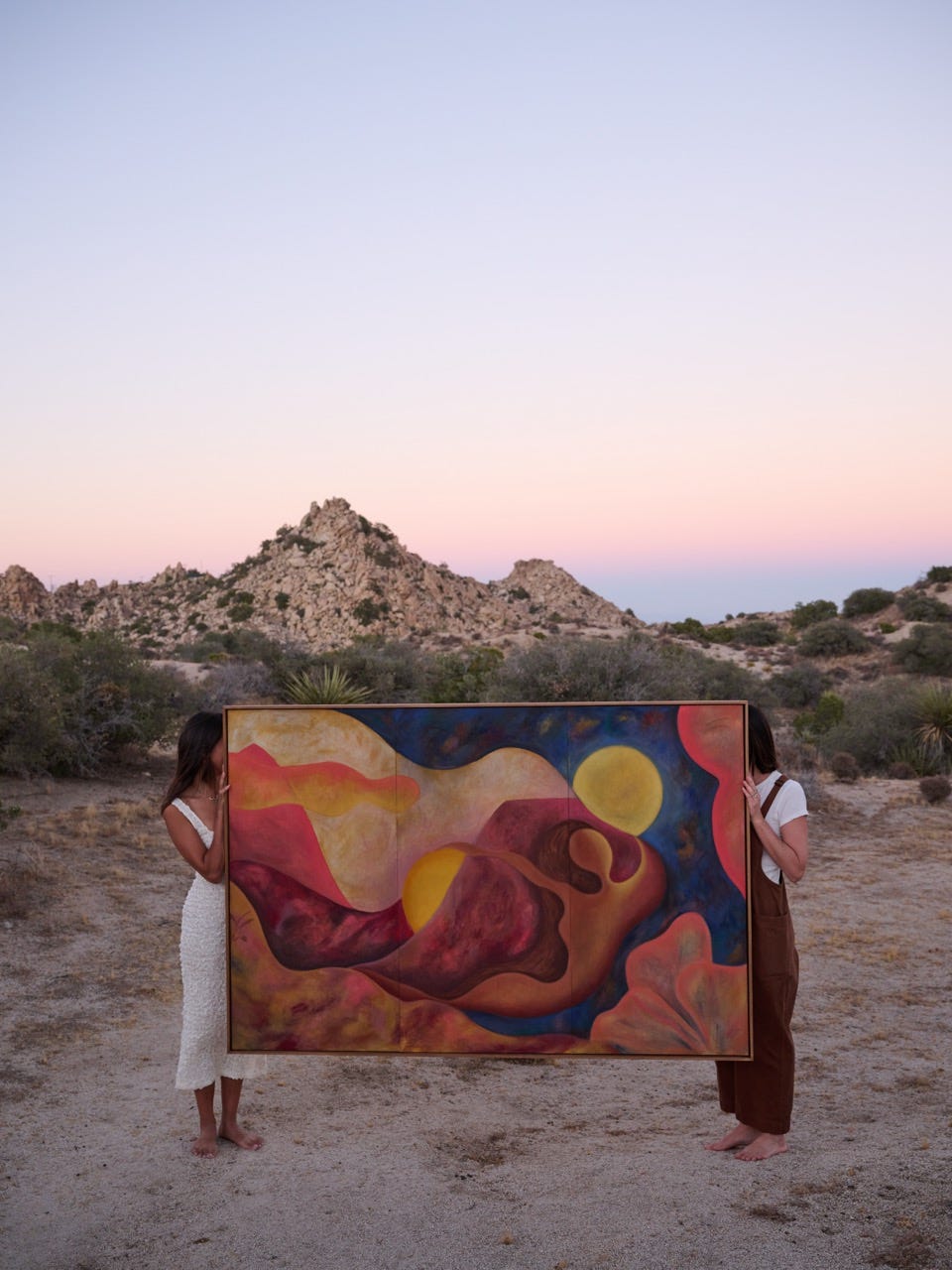
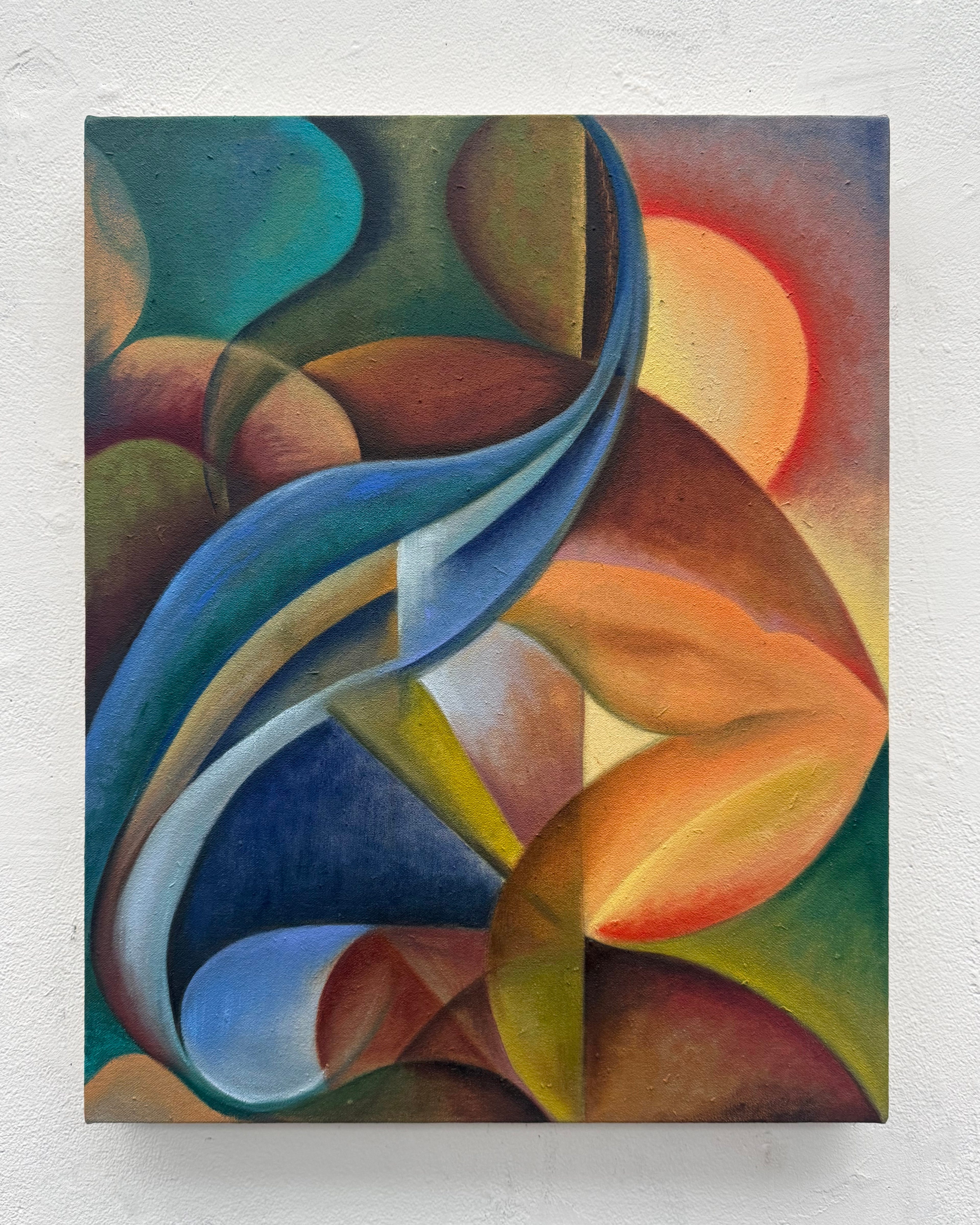
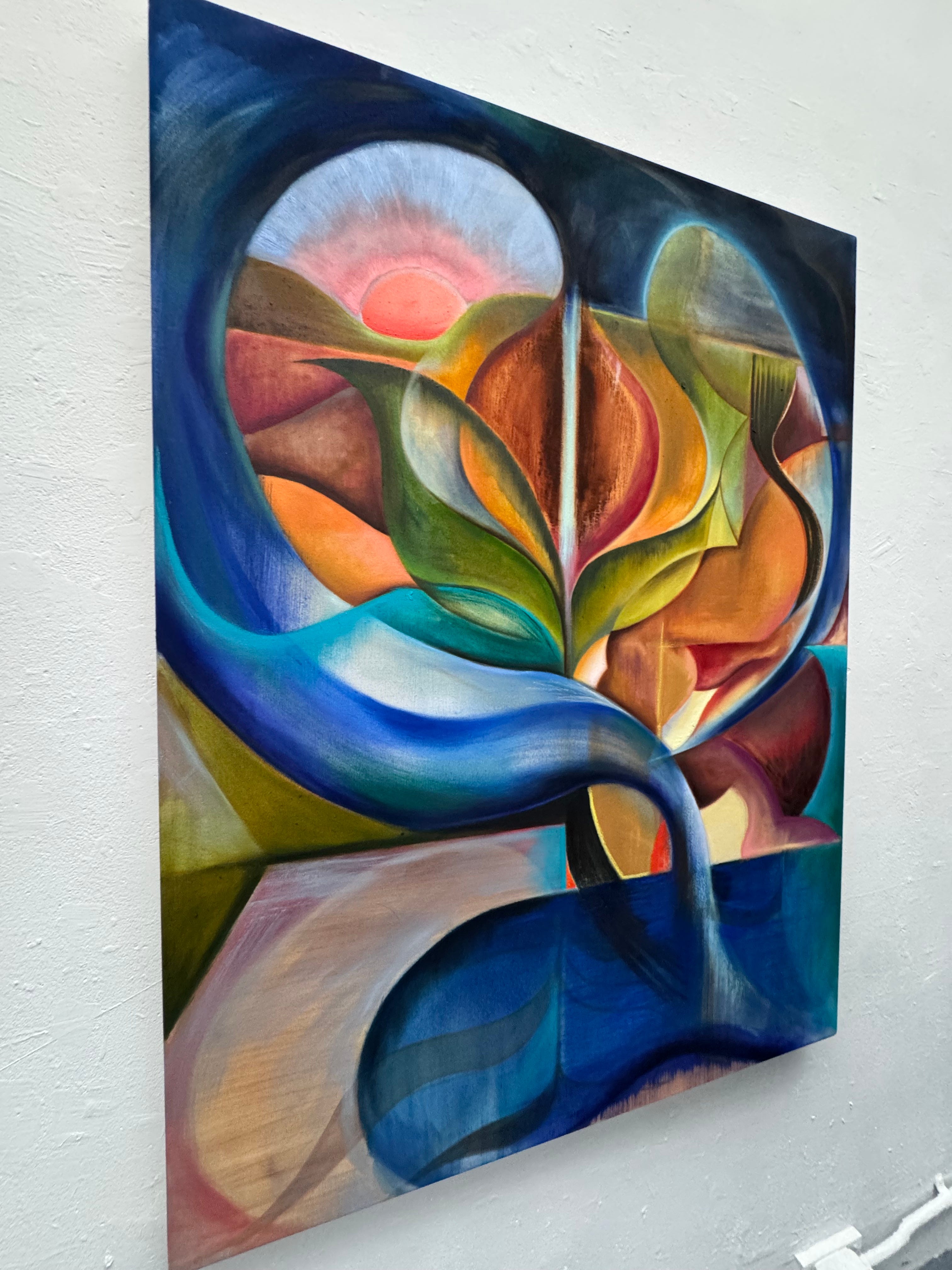
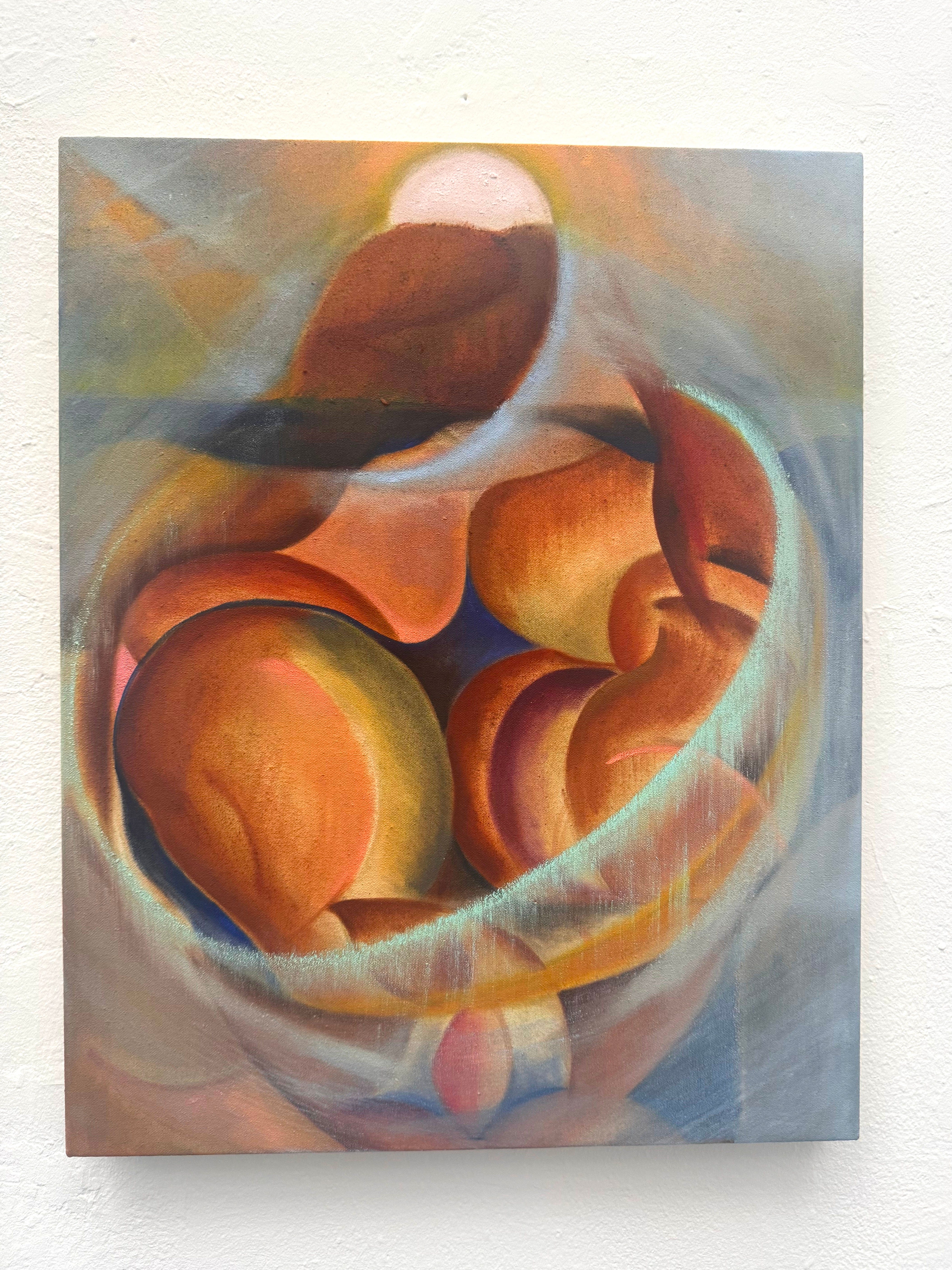
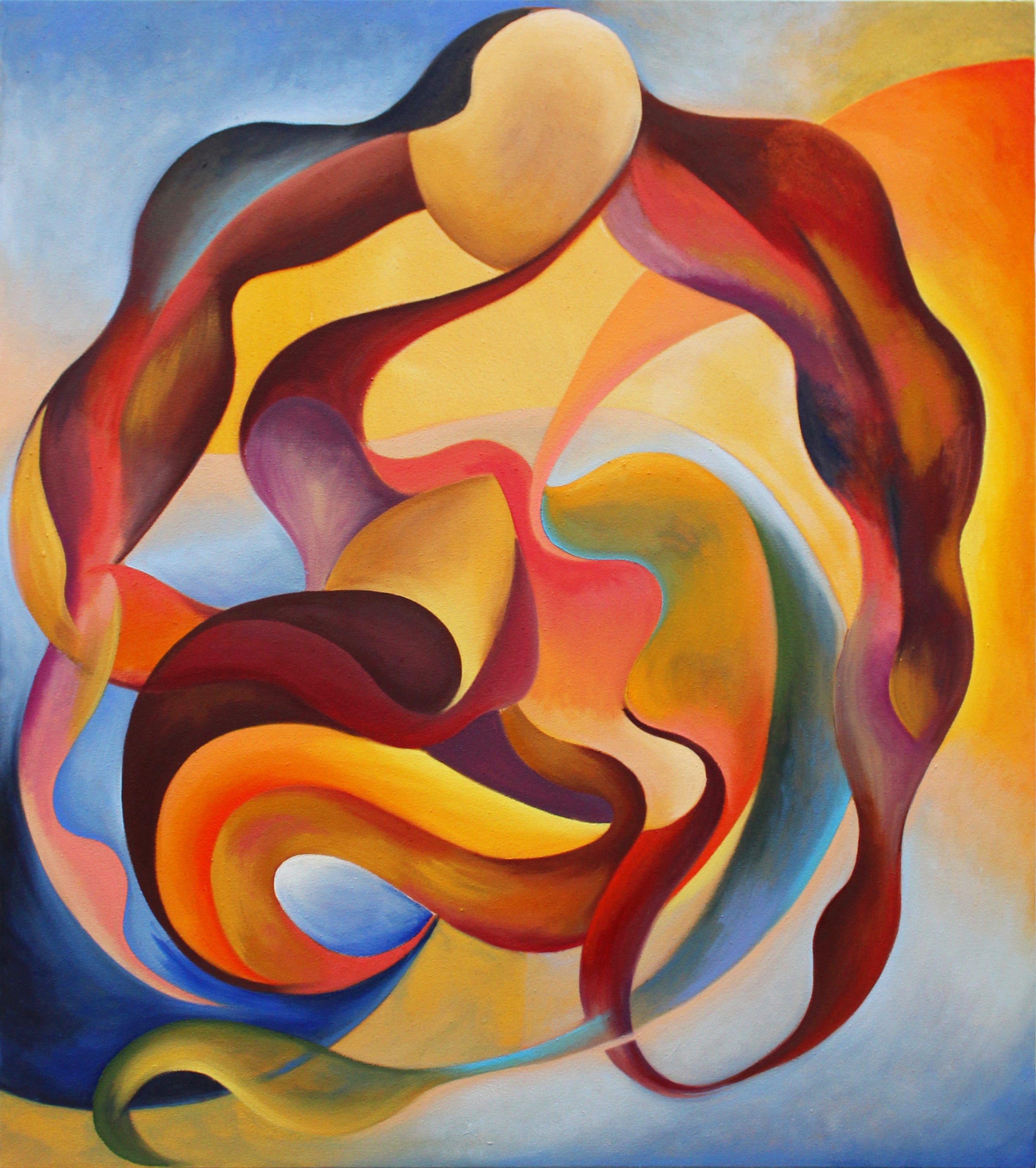
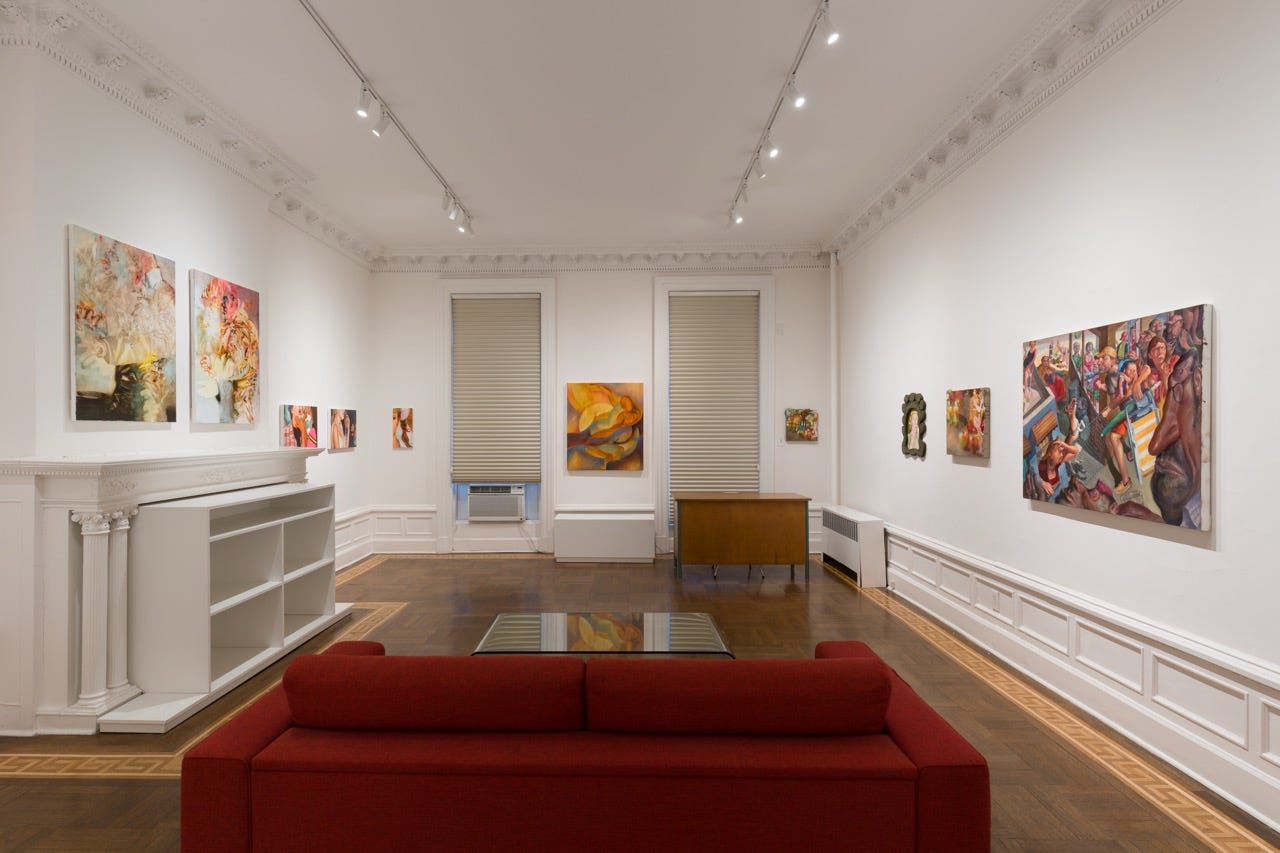
Now based in New York and fresh from her time at the New York Studio School, Maceda makes paintings that hover between body and landscape, desire and restraint, mysticism and structure. Her forms feel fluid, but not loose; sensual, but not easily consumed. They carry the warmth of morena skin, the afterimage of the desert, the pressure of observation, and a newer, cooler light that she describes as cosmic or mythic.
What I love about her work is that it refuses to resolve too quickly. I have one of Alex’s works in a nook near my dining table, and I love hearing each visitor’s interpretation of what they see. It becomes a kind of modern Rorschach test, revealing as much about the viewer as the image itself.
Last week, I had the chance to see her newest body of work in person at her MFA thesis show at the New York Studio School.
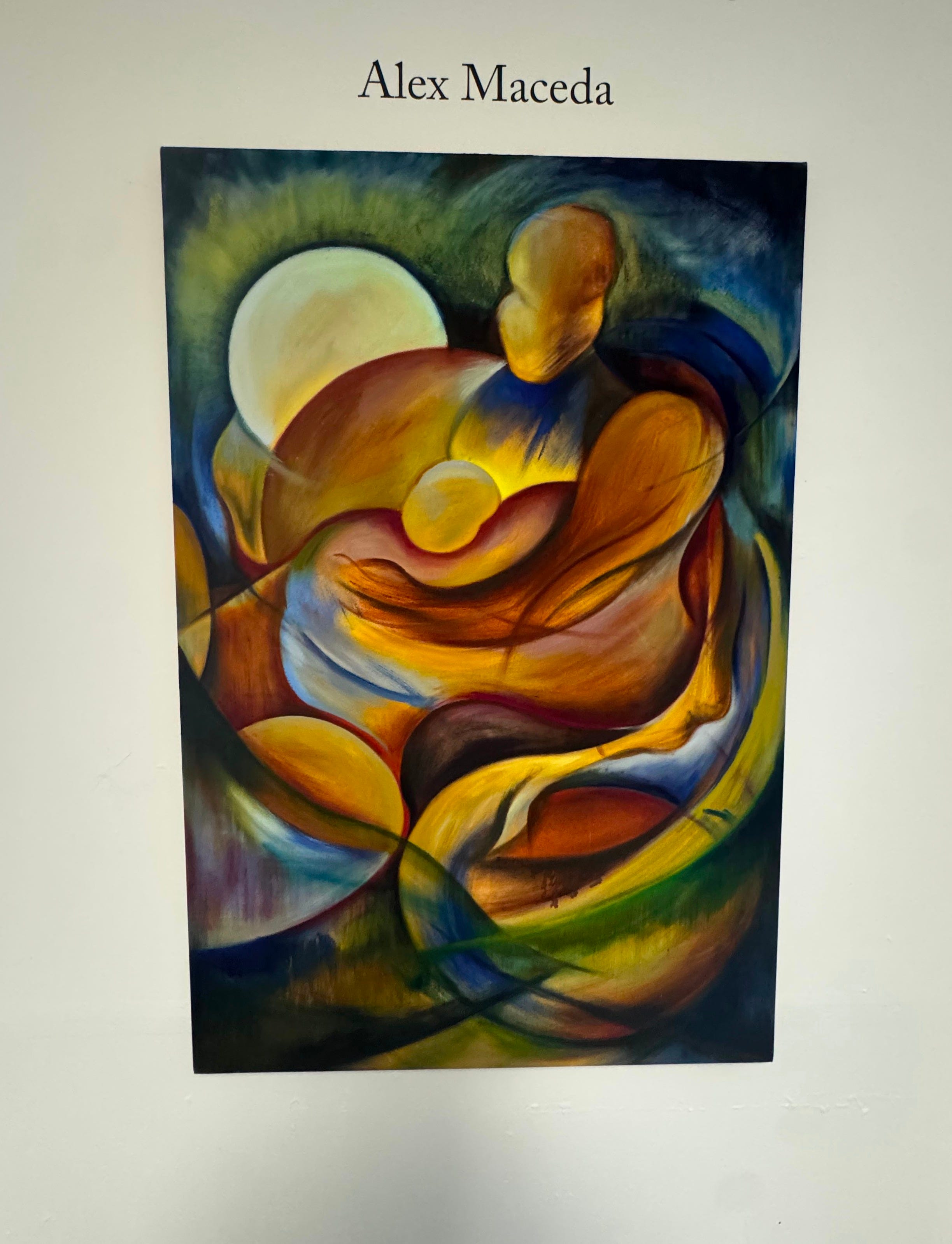
In our conversation, Alex and I spoke about stillness as a creative necessity, what painting from life has taught her about abstraction, the vulnerability of ambition, and why ambiguity is not a failure of communication.
Read on for our full interview.
From Startups to Studio
Was there a clear sliding-door moment that made you choose art as a life, not a hobby, or was it more of a slow internal shift?
Fall 2019, I got promoted to VP of Marketing at the start-up I was working at. I was 30 and it was the job I had been gunning for for years. I finally got it, and realized I didn’t want it. Instead of taking it, I quit. I didn’t really have a plan, I just knew I wasn’t happy and that I wanted to do something more creative. They asked me to stay until February and I left the day before my 31st birthday. 3 weeks later San Francisco shut down for COVID. I was supposed to travel for 6mo and instead got trapped in my apartment and started painting again, basically for the first time in a decade. Started an Instagram for my art and forced myself to post everyday, which was extremely panic-inducing at the time. It probably took me another year and a half to feel comfortable calling myself an artist. It was probably 3 years before I really thought, oh maybe I could do this. I thought painting was something I’d pursue after I retired. I thought my path was going to be more of a collector and patron, but that’s the thing about a vocation – you can’t help but do it, even it takes you a while to realize it’s calling you. It was always there unconsciously, but it took me awhile to consciously get comfortable with it.
Stillness as a Practice
You’ve talked about actively seeking quiet in New York — even making drawings in saunas. What is it about those spaces that helps you access the work?
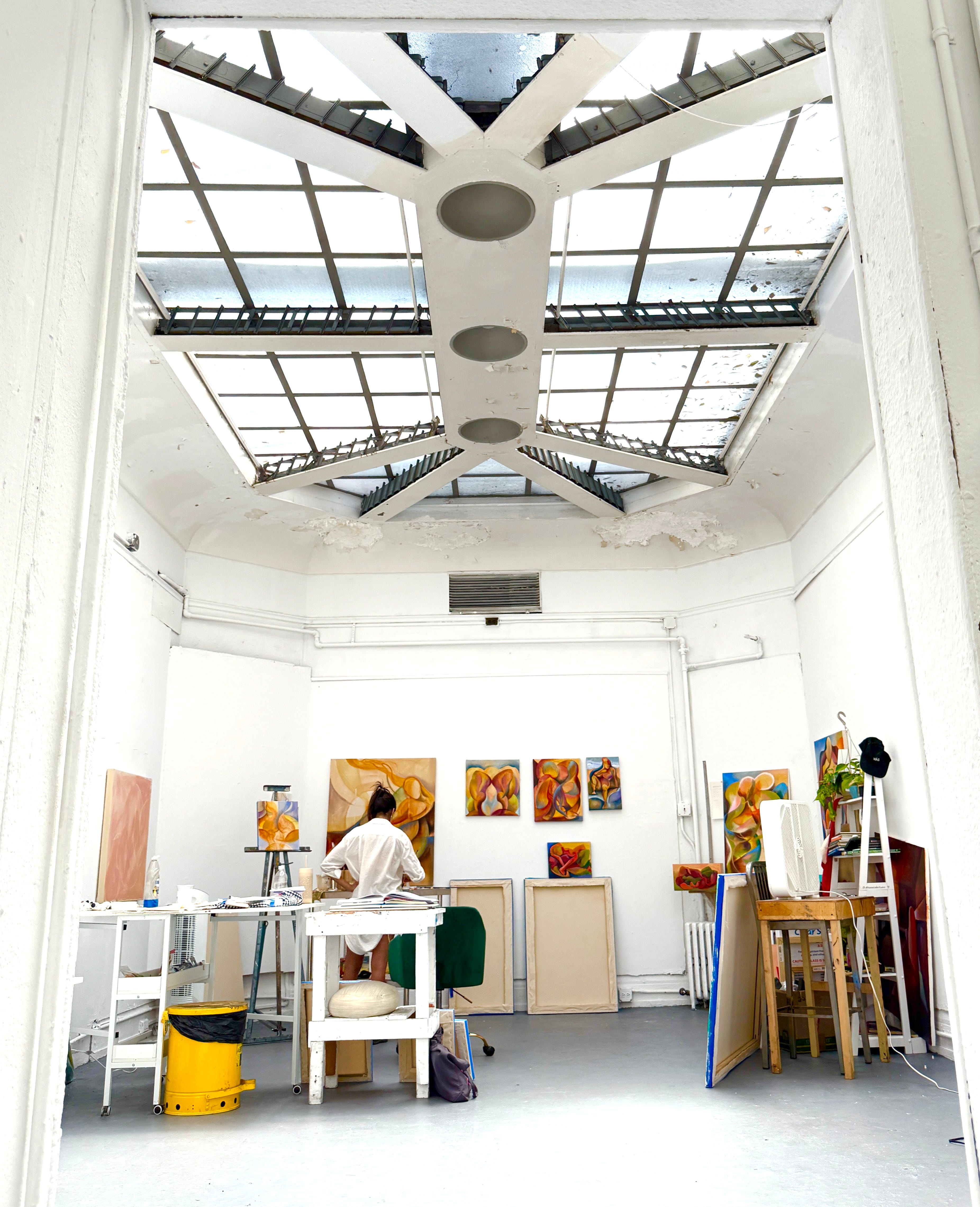
When I talk about quiet, I’m really talking about stillness, which I think about as a state of being in which things can emerge. When everything is moving so quickly – people, e-mails, social media, events – you are activated in a way that is often not generative for creative work. I’m looking for a place, which is a mental/energetic place, where things get still enough for new ideas to reveal themselves. Some ideas hit you like a truck, you can’t miss them, and that is great but more often for me, ideas are more like a wisp of a thing, right on the tip of your tongue. Almost a shadow. I’m trying to get to a place where I can be quiet enough to notice those wisps and start to cultivate them.
Do you think of this stillness as a luxury, a discipline, or a necessity? How has that relationship changed since Joshua Tree?
It’s a necessity that is readily available in some places, like Joshua Tree, and requires discipline to find in places where it is not so readily available, like New York City. I think many people here would say it’s a luxury in that way, but it is absolutely necessary. Shout-out to all the artists working in the city! We really have our work cut out for us.
Observation Feeding Abstraction
When you’re drawing/painting directly from life, what are you paying attention to most: edge, temperature, rhythm, proportion, something else?
When I work from life, i.e. am not inventing the composition purely from imagination, I ask myself, how can I compose what I see in a way that excites me? I pay most attention to – or at least get most excited by – negative space and the space between things. What is the shape made by the crook of the model’s neck, what is the shape made between two neighboring flowers and their leaves? Formally, that is as exciting as the object itself. Conceptually, I also love the idea of the space between things, the third thing that is created between you and me. Both are what enliven a composition for me. I’ve taken to painting a still life of flowers from life every couple weeks. It’s been a great addition to my practice.
What makes it back into the abstract work and what never translates, no matter how hard you try?
There are an insane amount of observable colors when you’re painting someone, especially a person’s bare skin, from life. The undertones, the way their skin color shifts in the light, the slight reflections from the colors of their clothes… it’s really hard to replicate that amount of subtlety if it’s not in front of you. But I think about that variety when I paint my forms – there is a lot of subtle layering and color mixing that goes into a swath of color that might just read “orange” at first glance that is highly influenced by painting bare skin from life.
A classmate called your work “fluid cubism.” Do you feel that description fits? If so, what’s “cubist” in your mind — structure, fragmentation, multiple viewpoints, time?
I love to hear what my work recalls for people because I pull from such a wide range of references, both aesthetically and conceptually. I always say it’s not not (fill in the blank). It’s not not fluid cubism, it’s not not orphism, it’s not not futurism. The cubists definitely have a seat at the table – I am often actively thinking of multiple viewpoints flattened into a 2D space. I love Duchamp’s early paintings, somewhere between cubism and futurism. I love the depiction of movement in futurism but I am almost always depicting organic, rather than industrial forms. I was recently in a group show at Harper’s focusing on neo-surrealist figuration, and I loved that too. I pull a lot from my own dreams and visionary experiences.
Bodies as Landscapes, Landscapes as Bodies
You often describe your forms as bodies, landscapes, or something suspended between the two. Are there moments you want the viewer to toggle between those readings, and moments you want them to stay in ambiguity?
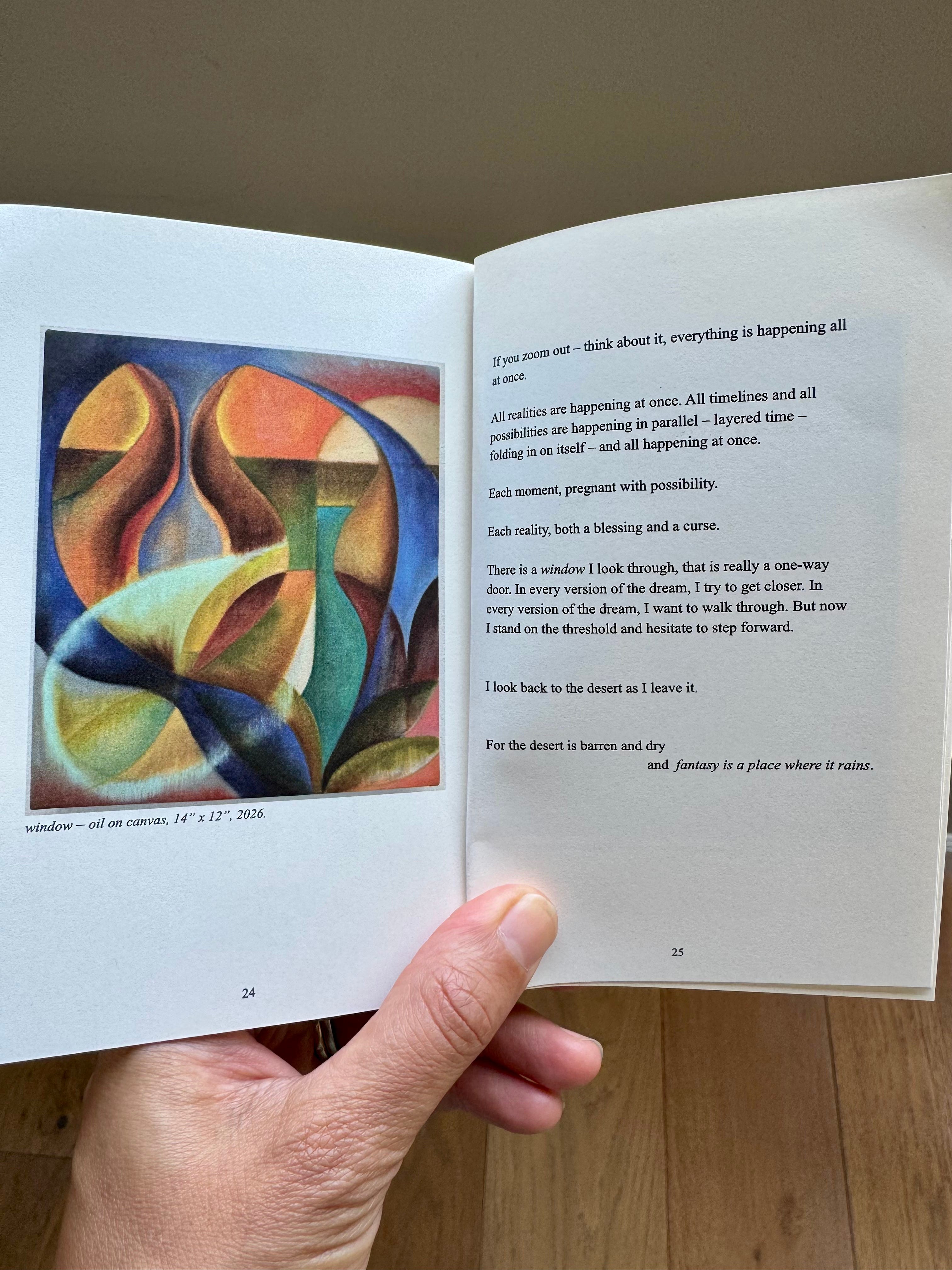
I currently have a note tacked on my studio wall that says, “ambiguity is not a failure of communication.” This feeling of toggling, suspension, push/pull, things not being here nor there, is one that is currently very important to me in my work. I think ambiguity is probably the goal in that I think it opens the work up more to interpretation, which is more interesting. I think what the viewer sees is infinitely more interesting than whatever I want them to see. Is a shape a thigh, a hill, a finger, a flower, a wing, a vagina? Is it sexual, erotic, spiritual, or simply geometric? Or is it all those things?
Color as Identity, Without Being Literal
You’ve spoken beautifully elsewhere about mixing morena skin tones and how that opened your palette. What are the undertones you’re chasing now, the ones that aren’t obvious until the painting is done?
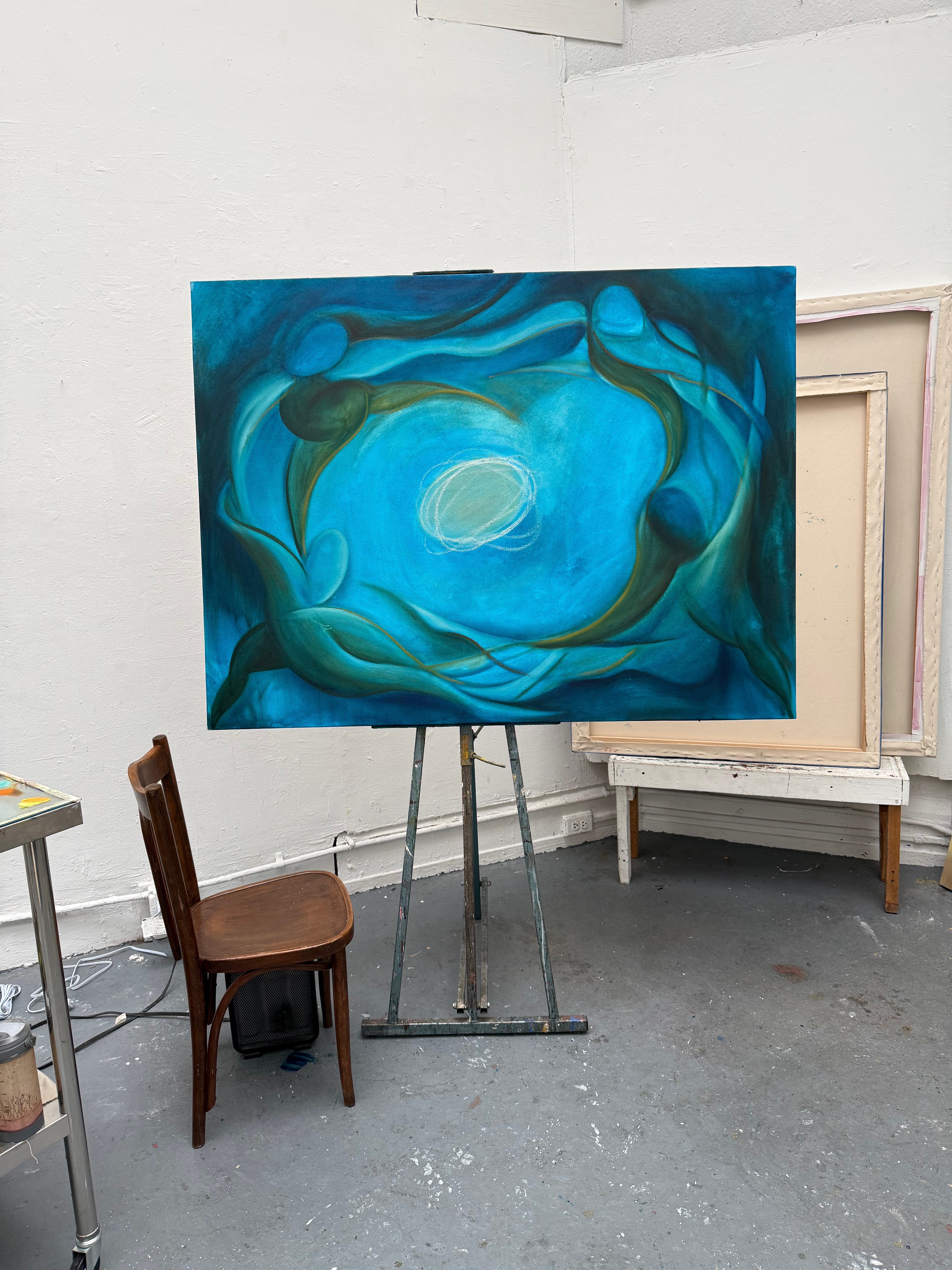
I hope there is always a certain type of light in my paintings; light and color are inextricable for me. For a morena skin tone, there is a warmth or light emanating from the browns. When I was working in the desert, there was a lot more literal moonlight and dawn-over-the-horizon type light in my paintings. Now I am working more inside and have had to dig deep internally for source material. As I step back from the body of work I’m working on now, the undertones and light feel a bit more mystical – bright light that emanates from inside a form rather than shines onto it. I’m doing a lot more grounds in turquoise rather than yellow, so the undertones are cooler - cosmic or mythic, rather than solar or earthly.
The Studio as a Container
You mentioned being able to identify classmates’ work by “touch and language.” How would you describe your own touch now and how has it changed this year?
I am a lover of a fluid gesture: a wave, a curve, a sweep, a wash of color, and a sensitive touch, everything just so. Over the past year I have added more straight lines, horizontal and vertical, and now start more paintings on a grid. I’ve found the contrast actually enhances the fluid gesture by offsetting it.
I’ve added more types of mark-making: more paint, oil stick, drawing. My color palette has also opened up. I am still interested in tonality, sensitivity, and light, but I’m also more interested in adding something unexpected and breaking up the grace of it all.
I don’t think it’s possible to ever really lose or get away from yourself. Despite the newness, there is always still an essence that remains.
Desire, Ambition, and the Next Turn
You’ve talked about being inspired to go bigger. What makes a painting “ambitious” to you — scale, complexity, emotional risk, something else?
It is all those things – I associate ambition with vulnerability. It is admitting you want to take up more space than you currently do and risking the potential failure or rejection that comes with that assertion. That could be literal space, like size of canvas, but more often I think it is subject matter, palette, composition – space in the conversation. Energetic space. Space outside the space that people associate with you and your work.
What are you trying to protect in your work as your visibility grows?
My work is incredibly earnest. I have sometimes found the art world, especially on the east coast, to be quite cynical. I hope to keep the vulnerability that is at the heart of it.
What are you most excited about for this upcoming year after graduation?
School is a pressure cooker. You get so much feedback, wanted and unwanted, and are expected to produce at a pace concurrent with an academic calendar, which can be thrilling but is also unsustainable.
It has been extremely generative, and I am grateful for the experience, but it has also felt like a yearlong inhale: taking everything in, absorbing. I think graduating will feel like an exhale, and that is when the most exciting work happens. You let go and things settle and unfurl.
I felt it happen last summer after my first year. Those few empty months were extremely generative and helped me understand what had just happened. I’m excited to settle into a studio here in NYC more permanently and see how the work evolves. I’m showing at a couple art fairs the same month as graduation and am excited to see how those relationships evolve. I’m also excited to go on a proper vacation.
LOTA Fast Three
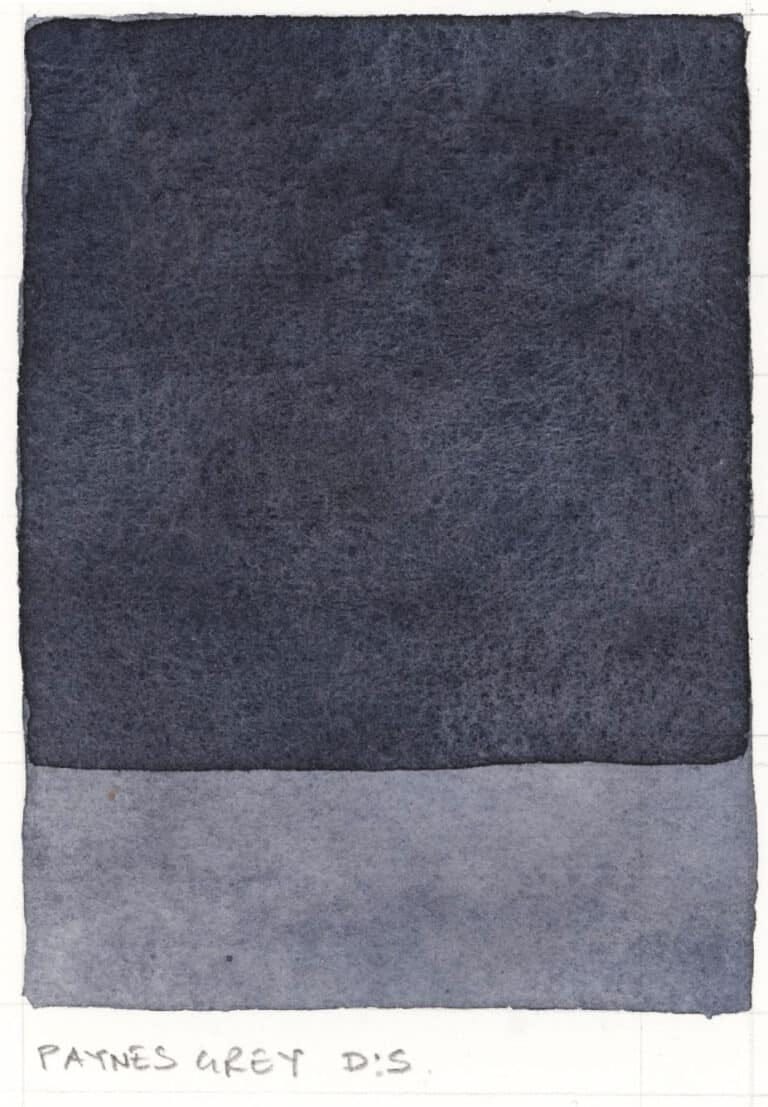
A color that keeps returning and what it signals for you right now – Payne’s Grey. It used to be my favorite color to paint with and I associated it primarily with melancholy. I left it to the side for a year or so and recently brought it back to paint nocturnes. I still associate it with emptiness, but the emptiness that makes space for possibility vs. emptiness associated with lack. I find it to be quite warm now.
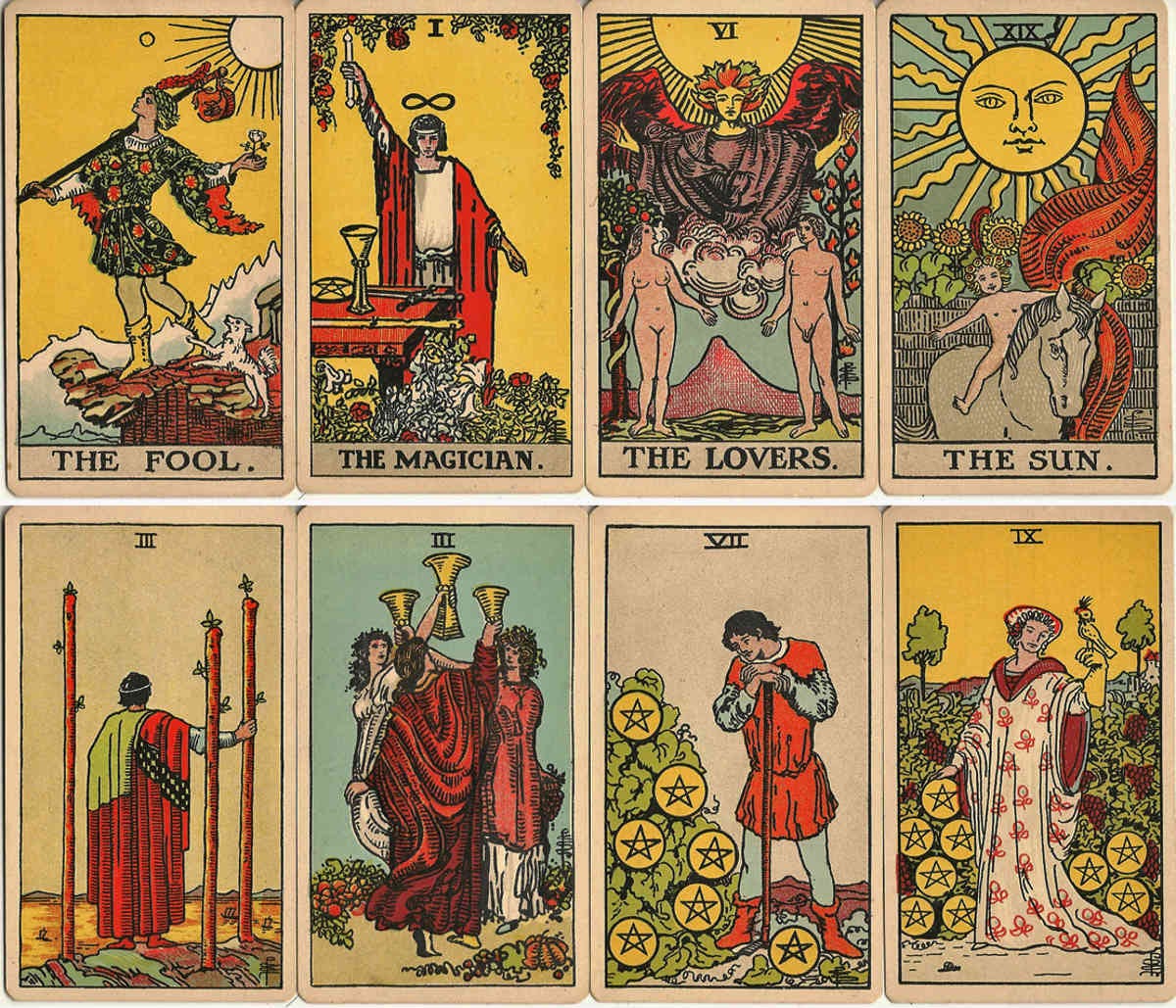
One non-art object you keep near you in the studio and why – I have a deck of Rider-Waite Tarot Cards. Most mornings I pull three cards and ask, “what do I need to know about my practice today.” It is a very centering practice and aspects of the cards often make their way into paintings.
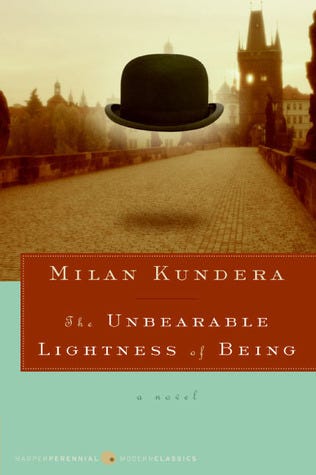
An artist (or writer / filmmaker / musician) who’s quietly shaped your way of seeing – I’ve read Milan Kundera’s “The Unbearable Lightness of Being” 8-10 times, first time when I was 16. His writing is magical realism meets philosophy and has profoundly shaped how I experience the world.
Thank you to Alex for sharing her practice with LOTA. You can follow Alex’s work on Substack and Instagram, or learn more through her website.
P.S. New here? Start with the art quiz to discover your style.